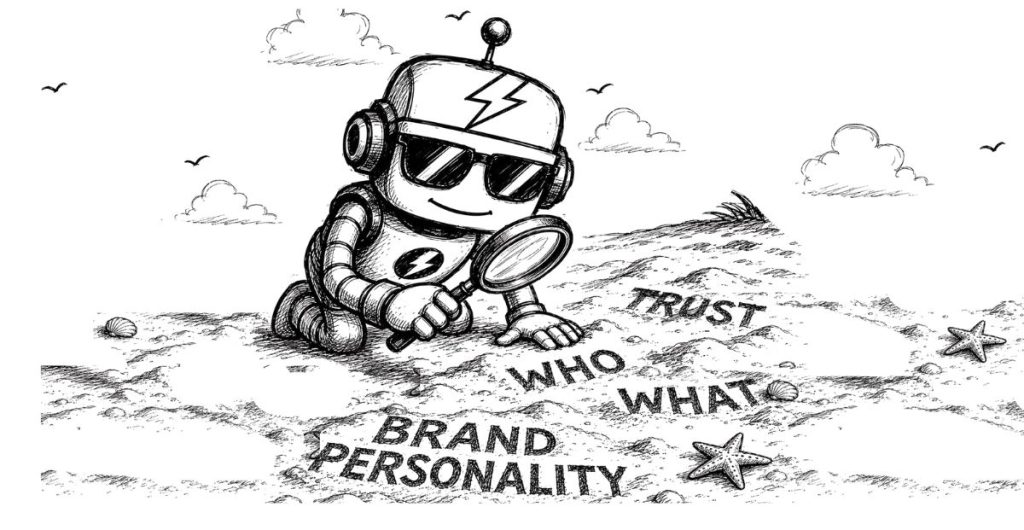
A sub-question is one of the smaller questions hiding inside a bigger prompt. The user asks one thing. AI needs to understand many things.
Let’s use this prompt: “Best AI visibility agency for a B2B SaaS company”
That looks like one prompt. Inside it, AI needs to answer a full chain of smaller questions:
What is AI visibility?
What does an AI visibility agency do?
Why does AI visibility matter for B2B SaaS?
Who is asking this question?
What problem are they trying to solve?
What should a VP Marketing care about?
What should a Head of Growth care about?
Which sources explain this topic clearly? Which brands are connected to this category?
Which company looks trusted enough to mention?
Those are the sub-questions. They are the real map behind the prompt. When you track the final prompt, you see the output. When you map the sub-questions, you see the work.
Why AI needs sub-questions before it can answer
AI answers are built from meaning. That means AI needs to understand the topic, the context, the user, the market, and the kind of answer that would actually help. When someone asks for the “best AI visibility agency,” they may want a list. But the task behind the list is bigger. They may be trying to:
Understand a new category
Compare possible partners
Learn what AI visibility includes
Check what they should expect from an agency
Reduce risk before choosing a vendor
See who the market already trusts
Find the next step for their team AI needs content that helps with those smaller jobs. This is why sub-questions matter. They show you what AI needs to understand before it can decide who belongs in the answer.
Prompt tracking alone gives you half the story
Prompt tracking is useful. It can show:
Where your brand appears
Where competitors appear
Which sources AI cites
Which answers mention your category
Which platforms mention your product, service, or market That data matters.
The problem starts when the team stops there.
A prompt tracking report can quickly become: Screenshot. Competitor appeared. We disappeared. Panic. Another screenshot. Another competitor. More panic. That moment feels familiar because AI visibility is new, and everyone wants proof. But “we are missing” gives the team a problem without a plan.
The stronger question is: Why are we missing?
Maybe the competitor explains the category better. Maybe their content answers basic questions more clearly. Maybe their service page makes the audience obvious. Maybe their website, LinkedIn, YouTube, and third-party mentions repeat the same message. Maybe AI understands their role in the market better than it understands yours.
That is the real gap. Prompt tracking shows the symptom. Sub-question tracking helps find the reason.
The 6 types of sub-questions hiding inside most prompts
Most business prompts hide 6 useful question types. This framework is the heart of the work.
1. Definition questions: What is this?
AI often needs to define the topic before it can recommend, compare, or explain. Examples:
What is AI visibility?
What is GEO?
What is prompt tracking?
What is an AI citation?
What is AI-readable content? Simple definitions matter. Clear category language matters. A brand that explains the topic clearly gives AI a stronger reason to connect the brand to that topic. A weak definition creates confusion. A clear definition creates a starting point.
2. Problem questions: Why does this matter?
AI needs to understand the pain behind the prompt. Examples:
Why are competitors showing up in AI answers?
Why is our brand missing from AI search?
Why does AI cite some sources and ignore others?
Why does our content rank in Google and still feel weak in AI answers?
Why does AI misunderstand what we do? This is where the topic becomes a business problem. A brand that explains the pain clearly gives AI stronger context. For WeDoSEO’s audience, that pain often sounds like this: “We already have content, SEO activity, and a marketing motion, but AI answers are changing how buyers discover and compare brands.” That is a real problem. That is also a content opportunity.
3. Audience questions: Who is this for?
AI needs to know who the answer should serve. A founder, VP Marketing, Head of Growth, SEO lead, and marketing ops manager may all ask about AI visibility. They need different answers. Examples:
Is this for a B2B SaaS company?
Is this for a startup entering a new market?
Is this for a VP Marketing trying to protect growth?
Is this for an SEO team learning GEO?
Is this for a traditional company trying to understand AI search? Audience clarity helps AI match the right content to the right user. A page that says “AI visibility services” gives one signal. A page that explains “AI visibility strategy for B2B SaaS teams with slowing organic growth and unclear GEO direction” gives a much stronger signal.
4. Comparison questions: How should this be evaluated?
Many prompts ask for a choice. Even when the user does not write “compare,” AI often needs to compare. Examples:
How is GEO different from SEO?
How is prompt tracking different from AI visibility strategy?
How should a company compare AI visibility agencies?
What makes one source more useful than another?
What should a VP Marketing check before choosing a partner? Comparison content is powerful because it gives AI structure. It helps AI explain what matters. It helps humans make better decisions. It also helps your brand show how you think. And in AI visibility, how you think is part of why AI may trust your content.
5. Trust questions: Who should AI believe?
AI needs trust signals. It needs to understand which sources are useful, clear, repeated, and supported by the wider online presence. Examples:
Which sources explain this topic clearly?
Which brands are connected to this category?
Where else is this company mentioned?
Does the company say the same thing across its website and social channels?
Do third-party sources support the same meaning? This is where cross-platform consistency becomes important. Your website is one signal. LinkedIn is another. YouTube is another. Mentions, references, backlinks, and third-party pages add more context. If each platform tells a different story, AI gets a messy picture. If the same meaning appears across platforms, the brand becomes easier to understand.
6. Action questions: What should the user do next?
AI answers usually need to move the user forward. Examples:
What should we audit first?
Which content gaps should we fix?
Which prompts should we track?
Which sub-questions should become content?
Which pages need better structure?
Which authority signals should we strengthen? Action questions turn prompt tracking from interesting data into actual work. They help the team move from “look what AI said” to “here is what we build next.”
The simple formula for prompt tracking value
Prompt tracking value = prompt visibility × sub-question clarity × content gap quality × brand fit × actionability Here is what each part means:
Prompt visibility: Do we appear, who appears, and which sources are cited?
Sub-question clarity: Do we understand the smaller questions behind the prompt?
Content gap quality: Are the missing answers important enough to build?
Brand fit: Does this question connect to our service, audience, and market?
Actionability: Can we turn the insight into content, structure, messaging, or authority work? This formula keeps the team focused. A prompt with high visibility interest and low actionability can waste time. A prompt with clear sub-questions and strong brand fit can become a strategy.
Which sub-questions deserve content?
Every sub-question does not need a full article. Some need one section. Some need an FAQ. Some need a service page update. Some need a comparison table. Some need a LinkedIn post. Some need a YouTube video. Some need third-party authority work. Use these 5 filters:
Customer pain: Does this question connect to a real pain your audience has?
Business fit: Does the answer connect naturally to what your brand offers?
Decision value: Does it help the reader understand, compare, trust, or act?
AI clarity: Does it help AI understand the category, audience, or brand?
Competitive gap: Is the current answer missing, weak, or owned by competitors?
If a sub-question gets 4 or 5 yes answers, it probably deserves content. If it gets 1 or 2 yes answers, it may belong inside another page or section. That is how you avoid creating content just to fill space.
Example: one prompt becomes a content roadmap
Let’s take this prompt: “How do I get my brand cited by AI search engines?” Now break it apart. Sub-questions:
What does an AI citation mean?
Which AI platforms cite sources?
Why do some brands appear in AI answers?
What kind of content gets cited?
How does AI understand brand authority?
How does brand consistency affect AI visibility?
How do third-party mentions support trust?
How should a team measure citation progress?
Now map those questions to content:

Now the prompt has become a roadmap. You know what to explain. You know what to improve. You know what to build.
Why competitors may win the AI answer
Sometimes a competitor appears because the market already knows them. That happens. Many times, the reason is more practical: They answered the hidden questions better. Maybe they have a clearer definition. Maybe they explain the category in plain English. Maybe they have a strong “how to choose” guide. Maybe their service page makes the audience clear. Maybe they have third-party mentions around the same topic. Maybe their content cluster helps AI connect the dots. Maybe they repeat the same message across channels. Sub-question tracking turns this from a mystery into a diagnosis. Instead of saying: “AI likes our competitor.” You can say:
“They answer the comparison question better.”
“They have stronger audience signals.”
“They explain the category more clearly.”
“They have more external proof around this topic.”
“They own a sub-question we ignored.” That is information your team can use.
Where GA data fits into prompt tracking
Prompt tracking tools show what happens in tested prompts. GA data can show which pages receive traffic from AI platforms. The interesting part is the gap between them. Sometimes a team tracks prompts that feel important, while AI referral traffic comes from pages they did not expect. That gap can reveal useful insights:
AI may find your brand through educational content.
A niche article may answer a strong sub-question.
A comparison page may work harder than a service page.
Your audience may describe the problem differently from your internal team.
A page with simple language may be more useful than a page full of brand language. This is why prompt tracking should connect to analytics. The goal is to compare what you test with what users and AI systems actually use. When those two views come together, the content roadmap becomes much sharper.
How to turn prompt tracking into a content roadmap
Here is the workflow.
Step 1: Choose the prompts that matter
Start with prompts connected to your audience, category, and business goals. Good prompt groups include:
Problem prompts
Category prompts
Comparison prompts
“How to choose” prompts
Brand prompts
Competitor prompts
Buying-intent prompts Track fewer prompts at first. Go deeper on each one.
Step 2: Break each prompt into 6 sub-question layers
For each prompt, ask:
What does AI need to define?
What problem does AI need to understand?
Who is the answer for?
What needs to be compared?
What sources would feel trusted?
What action should the user take next? This gives you the hidden structure behind the answer.
Step 3: Score your current content from 0 to 2
Use the simple scoring system: 0 = missing. 1 = weak. 2 = strong. Do this for every sub-question. Then score competitors. The gaps will become easy to see.
Step 4: Choose the right content format
Match the content format to the question:
Definition question: glossary section, article, FAQ, service page intro
Problem question: blog post, landing page section, LinkedIn post
Audience question: use-case page, persona section, service page section
Comparison question: comparison guide, table, checklist
Trust question: authority page, third-party content, mention strategy
Action question: checklist, audit framework, step-by-step guide Format matters because AI and humans both need structure.
Step 5: Build semantic clusters
Do not leave answers floating alone. Connect related answers into clusters. Example cluster: AI visibility Supporting topics:
AI citations
GEO
Prompt tracking
AI-readable content
Brand consistency
Online authority
Content audits Each page supports the others. Each answer adds meaning. Together, they help AI understand what your brand is known for.
Step 6: Repeat the same meaning across platforms
AI does not learn your brand from one page only. It connects signals across your website, LinkedIn, YouTube, social platforms, third-party sources, mentions, and references. So after you build the content, make sure the same message appears across the right places. Your website should explain who you are. Your LinkedIn should support the same story. Your YouTube content should use the same core language. Third-party mentions should reinforce the same category and expertise. This is how meaning becomes stronger.
The main mistake: tracking more instead of understanding better
It is very easy to keep adding prompts. Brand prompts. Competitor prompts. Category prompts. “Best tool” prompts. “Top agency” prompts. Comparison prompts. Buyer-intent prompts. Soon, you have a huge prompt list. Great. Now what? The goal is deeper understanding. A smaller prompt list with strong sub-question mapping can be more useful than a huge list with no action plan. Ask: “Are we answering the questions AI needs in order to understand and cite us?” That question moves the team from monitoring to strategy.
What this means for AI citations
AI citations are connected to usefulness. A source becomes more useful when it helps AI:
Define a topic
Explain a problem
Compare options
Support trust
Guide the next step This is why sub-question tracking matters. When your content answers the right sub-questions, it becomes easier to use inside the answer. It gives AI clearer material. It helps AI connect your brand to the topic. It helps humans understand your expertise. It helps your content become part of the larger conversation around your category. That is the real point. AI visibility grows when your brand becomes understandable across the whole question chain.
Where RockingGEO (former WeDoSEO) fits
RockingGEO helps brands tell their story so they can be found, understood, and trusted across humans and AI. For prompt tracking, that means going deeper than the prompt itself. We help brands understand:
Which questions their audience is really asking
Which sub-questions AI needs to answer
Which content gaps are blocking visibility
Which competitors already own important parts of the conversation
Which pages need clearer structure
Which topics should become semantic clusters
Which authority signals need to support the brand story The work can include prompt and sub-question analysis, AI-intent query mapping, market and competition research, content strategy, semantic clustering, AI-readable content structure, brand consistency audits, AI citation optimization, website audits, and online authority strategy. The goal is simple: Make your brand easier for AI and humans to understand, trust, and bring into the right conversation.
Break the prompt apart
The next time you ask: “Did ChatGPT cite us?” “Did Gemini use our information?” “Did Perplexity mention our brand?”
Ask one more question first: “What did AI need to understand before it could answer?”
That is where the strategy starts. That is where the content roadmap starts. That is where AI visibility becomes something you can actually work on.
Prompt tracking shows what happened. Sub-question tracking shows what to build next. So when you ask next time: “Did AI use our information?” You want the answer to be: Hell yes.